
Luke 2: The Advent (ESV)
8 And in the same region there were shepherds out in the field, keeping watch over their flock by night. 9 And an angel of the Lord appeared to them, and the glory of the Lord shone around them, and they were filled with great fear. 10 And the angel said to them, “Fear not, for behold, I bring you good news of great joy that will be for all the people. 11 For unto you is born this day in the city of David a Savior, who is Christ the Lord. 12 And this will be a sign for you: you will find a baby wrapped in swaddling cloths and lying in a manger.” 13 And suddenly there was with the angel a multitude of the heavenly host praising God and saying,
14 “Glory to God in the highest,
and on earth peace among those with whom he is pleased!”
15 When the angels went away from them into heaven, the shepherds said to one another, “Let us go over to Bethlehem and see this thing that has happened, which the Lord has made known to us.” 16 And they went with haste and found Mary and Joseph, and the baby lying in a manger. 17 And when they saw it, they made known the saying that had been told them concerning this child. 18 And all who heard it wondered at what the shepherds told them. 19 But Mary treasured up all these things, pondering them in her heart. 20 And the shepherds returned, glorifying and praising God for all they had heard and seen, as it had been told them.
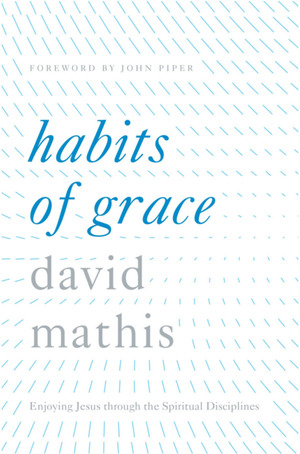
Habits of Grace
 Leave a Comment
Habits of Grace by David Mathis (Crossway, 2016)
Three areas to develop spiritual discipline:
HEAR HIS VOICE (WORD)
HAVE HIS EAR (PRAYER)
BELONG TO HIS BODY (FELLOWSHIP)
A Treatise on True Theology
Table of Contents:
Foreword
Introduction
Translator’s Preface
The Life of Franciscus Junius
Preface
The Life of Franciscus Junius
The Death of Master Franciscus Junius
A Treatise on True Theology
Preface
Thirty-Nine Theses Are Demonstrated in this Treatise
1. Whether True Theology Exists
2. What Theology Is
3. How Many Parts Theology Contains
4. Archetypal Theology
5. What Ectypal Theology Is, and in How Many Parts It Consists
6. The Theology of Union in Christ
7. The Theology of Vision in the Heavens
8. The Theology of Revelation in This Life
9. In How Many Parts the Mode of Communicating Theology Exists
10. Natural Theology
11. Supernatural Theology
12. What Theology Stated Absolutely Is
13. The Material Cause of Our Theology
14. The Formal Cause of Our Theology
15. The Efficient Cause of Our Theology
16. The End of Our Theology
17. Theology in the Subject
18. The Conclusion of the Work
Treasuring Christ When Your Hands Are Full
Gospel Meditations for Busy Moms by Gloria Furman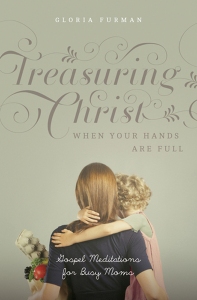
“These pages are filled with such helpful honesty and gospel centrality as we’re invited to look at the wonderful and messy world of motherhood! Reading it was like opening a window in the stuffy room of pretense, guilt, and self-focus that often press in on us as mothers. Let the windows fly open and come breathe the fresh air of grace!”
– Kristyn Getty, hymn writer and recording artist
“As mothers, our to-do list is never ending, and many well-meaning people pile on how-to lists to try to help us manage it all. Here’s good news: Treasuring Christ When Your Hands Are Full refreshes the soul with gospel truths and is not a how-to book. Gloria Furman shares the liberating gospel on every page, helping us fix our eyes on eternity rather than on our circumstances. You won’t come away with yet another thing to do; instead you’ll know the one who gave it all for you and has much to say in his Word to sustain you.”
– Trillia Newbell, author, United: Captured by God’s Vision for Diversity
“Moms do not need another book telling them how short they fall or what they can do to ‘be a better parent.’ Moms need a book that will lift their eyes away from themselves and onto Christ. Gloria Furman has delivered just that book. Her honesty about her daily struggles and her hope in her strong Savior are a delightful encouragement. The grand picture of God and his redeeming love that Gloria paints gives courage to face each day. We will be recommending this book to future moms, new moms, and moms that have been at it for years.”
– Jessica Thompson and Elyse Fitzpatrick, co-authors, Give Them Grace
“Oh, how I wish I had had a voice like Gloria Furman’s to whisper such sweet gospel truths into the frustrations and discontent of my younger mothering days! There’s nothing simplistic or syrupy here. This book presents rich and deep wisdom that is sure to generate joy and peace in the homes and hearts of many moms.”
– Nancy Guthrie, Bible Teacher; author, Seeing Jesus in the Old Testament Bible study series
“A stunning invitation to see Christ in and through the everyday mundane. Every mother needs to read this book, to bathe her soul in the truth of the gospel, to ‘stamp eternity on her eyeballs,’ and then come back tomorrow and do it all again. This book should sit on every nightstand of every weary mother wondering if there is anything more to look forward to than another sink full of dirty dishes, another day full of cleaning and wiping, cooking and scrubbing. The answer Gloria points us to is Jesus. And he is more than enough. I will be buying this book by the case and giving it away to all the moms I meet!”
– Joy Forney, missionary mama; proud wife; blogger at GraceFullMama.com
“I was wonderfully blessed by this book. With personal examples and teaching immersed in Scripture, Gloria invites us to savor Christ, the deepest need and joy of every mother. I certainly will reread it and look forward to recommending it to others.”
– Trisha DeYoung, happy wife to Kevin DeYoung, author, Just Do Something and Crazy Busy!; stay-at-home adventurous mother of six
“We need this book. In the frenetic and sometimes overwhelming task of parenting, it’s hard to remember the gospel. Thank God for Gloria Furman! She helps us worship Jesus in the midst of chaotic commotion and see ‘interruptions’ as invitations to joyfully trust him. Both mothers and fathers will find deep encouragement here!”
– Jon and Pam Bloom, President, Desiring God, and his wife
Ordinary
Sustainable Faith in a Radical, Restless World by Michael S. Horton 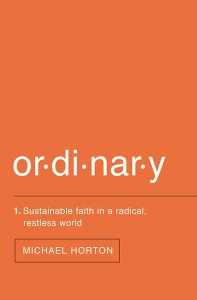 Endorsements:
“I am tempted to say that this is no ordinary book. In a culture that rhapsodizes over every achievement and idolizes many of those who stand out, it is easy for the church to drink from the same intoxicating elixir and swoon over gifted exceptions. How refreshing to read a book that tries to locate spiritual and theological maturity in ordinary faith and obedience, in ordinary relationships, in ordinary service, in ordinary pastors. Michael Horton does not mean to depreciate believers with exceptional gifts, but he rightly warns us against erecting shrines to them — shrines that blind us to the glory of the gospel worked out in the faithful discipleship of ‘ordinary’ Christian living, shrines that make us forget we serve a God who will not give his glory to another. That we need a book like this is more than a little sad; the book that addresses the problem wisely and well is, frankly, extraordinary.” — D. A. Carson, Research Professor of New Testament, Trinity Evangelical Divinity School. “Michael Horton’s Ordinary is, well, extraordinary. It can be described in many ways, and one is this: a call to love God and neighbor in freedom and grace, in the neighborhood you already inhabit, with the gifts and talents (and weaknesses!) you already pos- sess. Spiritual heroes need not apply.” — Mark Galli, Editor, Christianity Today “In an age of ‘radicals’ always promising us the next best thing, Michael Horton wisely and winsomely points us to God’s faithful- ness in the ordinary means of grace. In an era where everyone seems to have a nonprofit start-up that aims to the change the world, Hor- ton reminds us of the joy found in ordinary, oft-unnoticed congre- gations where the Spirit dwells. In an age where everyone seems to be writing their memoir, Horton shows us that God delights in lives that quietly but faithfully care for lost souls. Forget ‘the next best thing’; God is at work in small, good things.” —James K. A. Smith, Gary & Henrietta Byker Chair in Applied Reformed Theology & Worldview, Calvin College
Eight Traits of Good Teaching
by David Mathis
- A good teacher asks himself the hardest questions, works through to answers, and then frames provocative questions for his learners to stimulate their thinking.
- A good teacher analyzes his subject matter into parts and sees relationships and discovers the unity of the whole.
- A good teacher knows the problems learners will have with his subject matter and encourages them and gets them over the humps of discouragement.
- A good teacher foresees objections and thinks them through so that he can answer them intelligently.
Read the rest at Desiring God.
Taking God at His Word
Why the Bible Is Knowable, Necessary, and Enough, and What That Means for You and Me by Kevin DeYoung (Crossway, April 2014)
Endorsements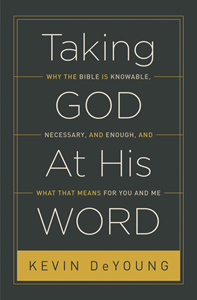
“My trust in God’s Word is greater, my submission to God’s Word is deeper, and my love for God’s Word is sweeter as a result of reading this book. For these reasons, I cannot recommend it highly enough.”
– David Platt, Senior Pastor, The Church at Brook Hills, Birmingham, AL; author, Radical: Taking Back Your Faith from the American Dream
“This little book is a highly readable introduction to Scripture’s teaching about Scripture that preserves the contours of a responsible and informed doctrine of Scripture, without getting bogged down in arcane details. Buy this book by the case and distribute copies to elders, deacons, Sunday school teachers, and anyone in the church who wants to understand a little better what the Bible is. Bad doctrine springs in part from ignorance. Blessed are those teachers and preachers in the church who, like the author of this book, combat ignorance by getting across mature theology in a lucid style that avoids generating theological indigestion.”
– D. A. Carson, Research Professor of New Testament, Trinity Evangelical Divinity School
“One of my prayers for the next twenty years of ministry, if the Lord sees fit to grant me that, is that we might see the level of biblical literacy exponentially grow. For that to happen we must learn what the Scriptures are and how heavily we can lean on them. Kevin DeYoung serves this end well in Taking God At His Word. May the God of the Word be known and cherished all the more because of this little book.”
– Matt Chandler, Lead Pastor, The Village Church, Dallas, TX; President, Acts 29 Church Planting Network
“This is a brilliant, succinct, yet thorough study of the authority and sufficiency of Scripture, based on what Scripture says about itself. Clarity and passion are the distinguishing marks of Kevin DeYoung’s writing, and this may be his finest, most important work yet.”
– John MacArthur, Pastor, Grace Community Church, Sun Valley, CA
“If you’re looking for a clearly and simply stated doctrine of Scripture, here it is. Kevin DeYoung has accomplished his aim of communicating what the Bible says about the Bible. He’s done it with the qualities we have come to anticipate from him: efficiency, pastoral care, wit, and rigor. Most of all, he has let the Word speak for itself.”
– Kathleen B. Nielson, Director of Women’s Initiatives, The Gospel Coalition
“This is the book that I will be handing out to those searching for true spirituality, those who want to hear a special word from God, and to those who want an improved knowledge of God. Kevin DeYoung convincingly teaches that God has adequately spoken to his people. Taking God At His Word is an accessible defense of the doctrine of Scripture, from Scripture, aiming to renew our trust and delight in God’s word.”
– Aimee Byrd, author, The Housewife Theologian
What if God Designed Marriage…
…to make us holy more than to make us happy?
Sacred Marriage by Gary Thomas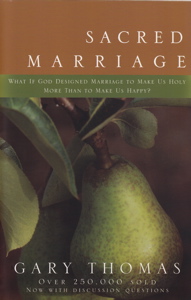
Quotes
“There is much in Christian history that has unofficially considered married believers to be ‘second-class Christians’ who compromised their integrity.” (p. 21)
“It’s easy to love God, because God doesn’t smell. God doesn’t have bad breath. God doesn’t reward kindness with evil. God doesn’t make berating comments. Loving God is easy, in this sense.” (p. 41-42)
“We must never be naive enough to think of marriage as a safe harbor from the Fall…. The deepest struggles of life will occur in the most primary relationship affected by the Fall: marriage.” by Allender and Longman (p. 53)
Real Marriage — Giveaway
For the month of February, this book is for those who are married or wish to get married. If you read Driscoll, this book might be too strong at times. Overall, it is helpful.
Real Marriage: The Truth About Sex, Friendship, and Life Together by Mark and Grace Driscoll
Thomas Nelson, 2012, 272 pages
Retail: $22.95
To enter the giveaway, answer this question: what does marriage mean to you?
For Philippine residents only.
Draw date: February 14, 2014.


 sola gratia